
Energy Market Indicators Help Businesses Decide When to Buy Electricity and Natural Gas
Energy costs change every day. For many businesses, electricity and natural gas are major operating expenses, and timing plays a big role in whether a company pays a high rate or a competitive one. Energy market indicators make it possible for businesses to understand where the market is heading, why prices are moving, and when it may be the right moment to lock in a supply rate.
This article explains what energy market indicators are, why they matter, and how businesses use them to make smart purchasing decisions.
What Are Energy Market Indicators?
Energy market indicators are signals or data points that reveal trends in the electricity and natural-gas markets. They help businesses understand whether prices are likely to rise, fall, or remain stable.
The most common indicators include:
1. Natural Gas Storage Levels
Weekly U.S. storage reports show how much natural gas is available.
-
High storage = lower prices
-
Low storage = higher prices
Since natural gas drives electricity prices in most deregulated states, this single indicator often influences both markets.
2. Weather Forecasts
Weather is one of the most powerful price drivers.
-
Hot summers increase demand for electricity (AC).
-
Cold winters increase demand for natural gas (heating).
Weather models help businesses predict seasonal pricing.
3. Supply and Demand Balance
When demand is strong and supply is tight, prices tend to rise.
When demand falls or supply grows, prices drop.
Businesses watch these trends to determine price direction.
4. Futures Market Pricing
Energy futures on exchanges such as NYMEX give insight into what traders believe pricing will be months or years ahead.
If futures prices rise, it signals that traders expect supply to tighten.
5. Pipeline Capacity Constraints
When pipelines are congested or offline for maintenance, natural gas prices can spike—especially in the Northeast and Midwest.
6. Power Grid Conditions
Grid reliability, reserve margins, and capacity market signals affect electricity pricing.
Reports from regional grid operators (PJM, ISO-NE, ERCOT, NYISO, MISO) provide key market insight.
Why Energy Market Indicators Matter for Businesses
Businesses must choose when to secure their electricity or natural-gas supply contract. Buying at the wrong time—during a spike—can lock in high rates for years.
Indicators help businesses:
• Avoid buying during price spikes
Understanding what is driving the market keeps businesses from signing contracts during temporary surges.
• Lock in lower long-term costs
By tracking trends, companies can secure multi-year contracts when conditions are favorable.
• Build predictable budgets
Stable and lower supply rates help avoid unexpected cost increases.
• Reduce financial risk
Market indicators help companies avoid exposure to volatile price swings.
• Forecast future costs
Businesses can plan out 12–36 months by tracking market trends.
How Businesses Use Energy Market Indicators to Know When to Buy
Below are the most common strategies companies use.
1. Monitor Weekly and Monthly Market Reports
Energy brokers, consultants, and market analysts track indicators such as:
-
Henry Hub natural gas pricing
-
Forward strip prices
-
EIA storage reports
-
Weather models
-
ISO capacity and demand data
These reports help identify whether the market is trending up or down.
2. Watch for Seasonal Opportunities
The best times to buy energy are often:
-
Spring (March–May)
-
Fall (September–November)
Demand is usually lower, giving businesses access to softer pricing.
3. Buy When Volatility Drops
Low-volatility periods typically lead to better pricing and long-term stability.
4. Use Layered Purchasing
Some businesses buy part of their energy now and part later.
This reduces risk and averages the cost over time.
5. Long-Term vs. Short-Term Strategy
Indicators help companies decide:
-
Whether to lock in a fixed rate
-
Whether a hybrid product makes sense
-
When to extend an existing contract early (blend & extend)
Businesses use indicator trends to evaluate the right timing.
Electricity vs. Natural Gas Indicators: How They Differ
Although the two markets are connected, each has its own signals.
Electricity Indicators
-
Power grid demand
-
Renewable generation output
-
Capacity auctions
-
Transmission constraints
-
Day-ahead and real-time pricing
Natural Gas Indicators
-
Storage levels
-
Production rates
-
LNG exports
-
Pipeline congestion
-
Weather models
Understanding the difference helps businesses choose the best strategy for each commodity.
What Happens When Businesses Ignore Energy Market Indicators?
Companies that ignore market signals often fall into common mistakes:
-
Renewing too close to contract expiration
-
Buying during major weather events
-
Waiting until rates spike before taking action
-
Assuming energy prices only move once a year
These errors can cost thousands—or even hundreds of thousands over the life of a contract.
Businesses that follow indicators avoid these pitfalls.
How Energy Brokers and Consultants Use Market Indicators
Professional energy advisors constantly track:
-
Futures curves
-
Storage reports
-
Market volatility indexes
-
Regional grid reports
-
Weather patterns
-
Pricing from dozens of suppliers
They use this information to provide businesses with:
-
Timing recommendations
-
Risk-management strategies
-
Competitive bidding from multiple suppliers
-
Long-term purchasing plans
This ensures that businesses make decisions based on real-time data not guesswork.
Conclusion: Market Indicators Guide the Best Energy Purchasing Decisions
Energy market indicators give businesses the insight they need to decide when to buy electricity and natural gas, how long to lock in, and which strategy minimizes risk.
By watching trends such as:
-
Natural gas storage
-
Weather forecasts
-
Futures market prices
-
Supply and demand
-
Grid conditions
Businesses can avoid high prices, stabilize budgets, and secure long-term savings.
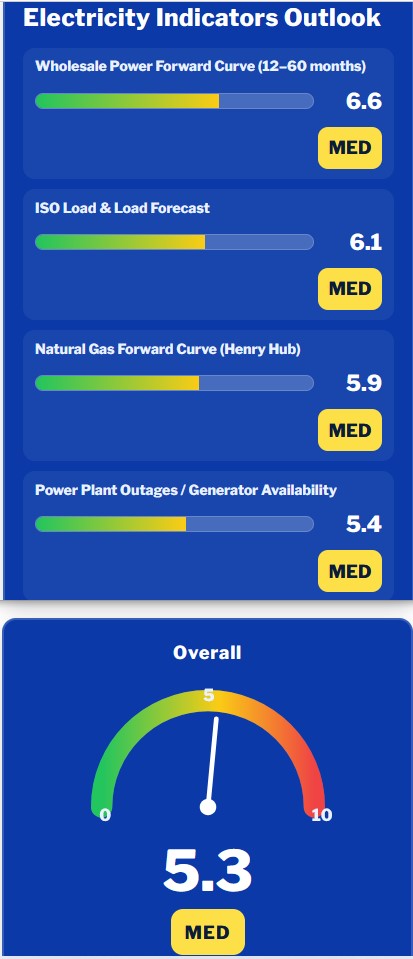
Electricity Market Indicators - Click Here
Natural Gas Market Indicators - Coming soon...